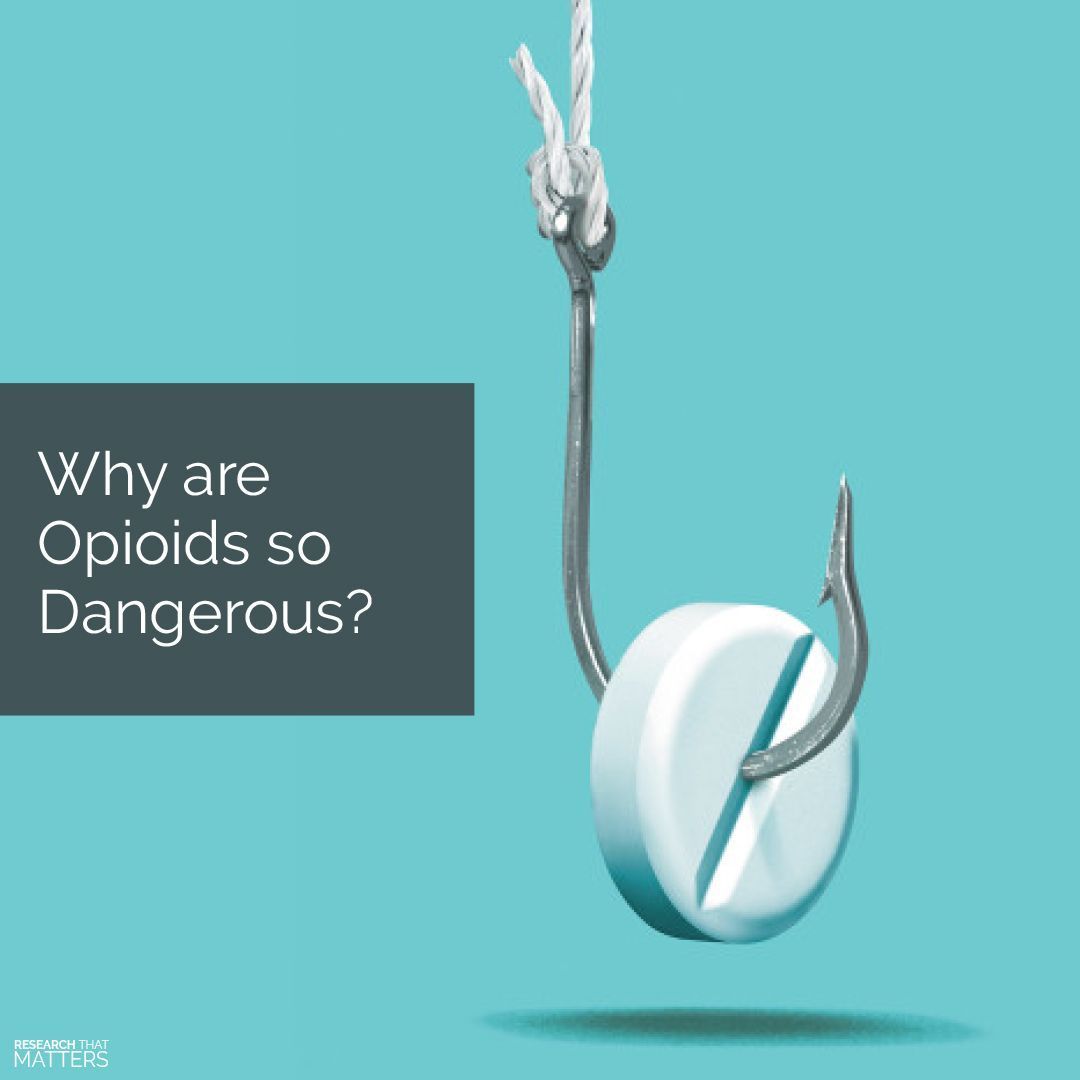
Why are Opioids so Dangerous?

(AUG) Week 1  - Why are Opioids so Dangerous.jpg

Bottom Line:

It's estimated that over 200 million opioid prescriptions are written each year. This use and abuse has led to an epidemic that's been fueled by chronic pain.

Opioids temporarily hide pain by attaching to receptors in the brain and boosting feelings of pleasure. Unfortunately, they do nothing to stimulate healing, leading to a pattern of pain, medications, more pain, and more medications.

The good news is that there is a better way to find relief.

Why it Matters:

Opioids are in the same family of drugs as heroin, and some opioid medications are thought to be even more addictive. The temporary relief that they offer comes at a steep price.

In lower doses, opioids can cause drowsiness or dizziness. In higher doses, they can cause your breathing and heart rate to slow down to dangerous levels. The most dangerous aspect of opioids is the addiction rate of up to 30%.

Here's a quick overview:

  • Opioids bind to the receptions in your nervous system that block pain and produce intense euphoria.
  • Tolerance on opioids can occur within a matter of days.
  • Withdrawal symptoms are severe and can lead to addiction.

Next Steps:

Nearly all the latest healthcare guidelines have stopped recommending opioids for non-cancer pain. In most cases, these drugs should not be taken for chronic pain or back pain.

Where do you start to find relief without these dangerous drugs?

Call us today. We’ll schedule a complete evaluation to discover the root cause of your pain, and, together, we'll find better ways to help you get back on your feet.

Science Source(s):

What are Opioids and Why are They Dangerous? Mayo Clinic. 2018.

Share This Blog

Dietitian in white coat consults patient. Fruit, juice, and scale on table. Blonde hair, indoor setting.
January 27, 2026
Learn how personalized nutrition and lifestyle changes at Canyon Creek Chiropractic can improve posture, recovery, and vitality.
Chiropractor treating a patient's lower back. The patient lies on a table, and the chiropractor uses their hands.
January 21, 2026
Discover how regular chiropractic adjustments support your immune system and well-being throughout cold and flu season.
Woman with neck brace on sofa, looking down at medication, indoors.
January 13, 2026
Get answers to the most common whiplash recovery questions, from pain management to exercises, by our Cottonwood Heights team.
Woman with long dark hair, grimacing, holding her neck at a desk with laptop.
January 7, 2026
Start the year pain-free! Explore innovative chiropractic treatments that relieve chronic whiplash pain—book your consult now.
Physiotherapist examining patient's leg in clinic; another patient and nurse in background.
December 23, 2025
Considering chiropractic care for your family? Learn about its safety, benefits, and holistic approach at Canyon Creek.
Man at desk, hand on neck, showing pain; laptop, desk lamp, phone, notebook.
December 17, 2025
Discover why cold weather intensifies whiplash symptoms and explore effective chiropractic solutions for lasting relief.
Cyclist clutching his neck, likely in pain. He wears a helmet, sunglasses, and a red shirt; outdoors.
December 9, 2025
Suffer whiplash on the slopes? Learn about symptoms, recovery steps, and holistic whiplash treatment at our Cottonwood office.
A healthcare provider adjusting a patient's neck. The patient is a woman in a black tank top.
December 3, 2025
Recover from whiplash pain during the busy holiday season with proven self-care and expert chiropractic solutions.
Chiropractor examining a woman's back in a medical office.
November 25, 2025
Discover how spinal and postural screenings at Canyon Creek Chiropractic can improve your health and prevent future pain.
A woman receiving a medical exam; doctor checks head and neck in a bright room.
November 19, 2025
Find out why early chiropractic treatment for whiplash is essential for a pain-free holiday season and faster recovery.